





In Indonesia, there's a tradition of routinely changing mummies' clothes every three years. Interesting, isn't
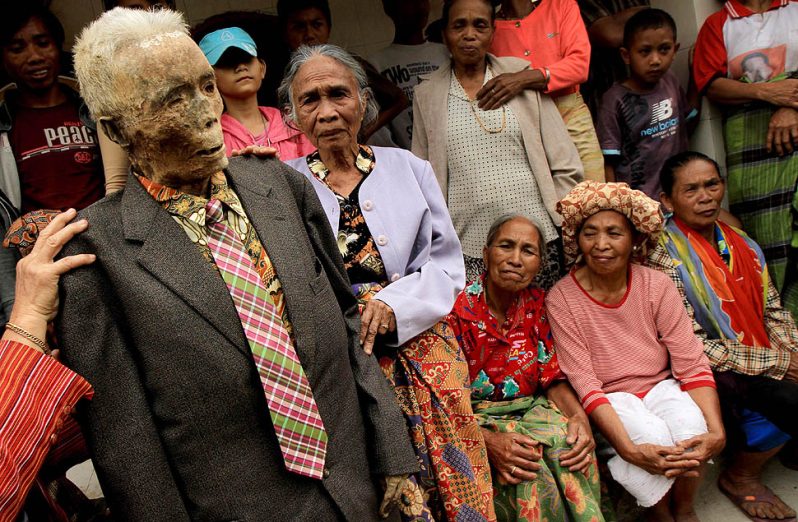
The Ma'nene tradition is one of Indonesia's cultural treasures.--
The Ma'nene ritual has several stages. It begins with a prayer in the ancient Toraja language, performed by a family member.
Afterward, the family sacrifices animals, such as bai (pigs and buffalo).
The number of pigs sacrificed is determined by the number of mummies in the grave, while the number of individuals sacrificed is determined by the size of the family group.
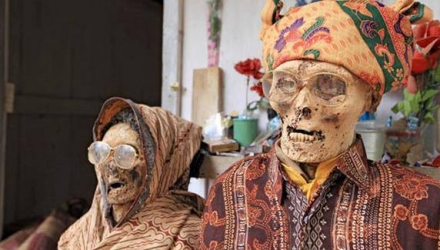
Animal sacrifices are performed to pay homage to ancestors. According to ancient Torajan beliefs, known as Aluk Todolo, the body's owner cannot reach Puya, or heaven, without a buffalo being sacrificed.
For the Toraja people, this buffalo is highly sacred. If a buffalo is not slaughtered, it is believed the body will not reach Puya. When a buffalo is slaughtered, a gong is usually rung. Ten gongs represent ten buffaloes being slaughtered, and so on.
After the animal sacrifice, the family prepares betel leaves to be placed in the grave, believed to act as the key to unlocking it.
Then, the family performs the opening of the grave, known as Pa'tene.
The grave contains more than one mummy; there are usually many belonging to the same family.
The Pa'tene ceremony marks the beginning of the Ma'nene ritual. The family immediately opens the mummy's coffin and lets it dry in the sun before cleaning it. The mummy is usually dried in the sun for three days to a week, depending on the family's agreement.
After drying the body, the cleaning process begins with replacing the coffin's bedding and clothing. Then, the body is cleaned using a brush or cloth.
Once the mummy is clean and its clothing has been changed, it is placed back in the coffin and placed back in the stone tomb. The Ma'nene ritual concludes with Ma'sisemba, or foot fighting.
BACA JUGA:Borobudur Temple, a Wonder of the World from Indonesia, Have You Been Here?
Origins of the Ma'nene Ritual
The Ma'nene ritual is said to have been derived from the story of a Torajan hunter named Pong Rumase. He was a resident of Lepong Bulan, whose territory encompassed Gowa, Makassar, Luwu, Bastem, Toraja, Mamasa, and the surrounding areas before Sulawesi was mapped.
Cek Berita dan Artikel lainnya di Google News
Sumber:
- Share: