






Unique and Interesting: Tooth Filing Traditions in Bali, Indonesia
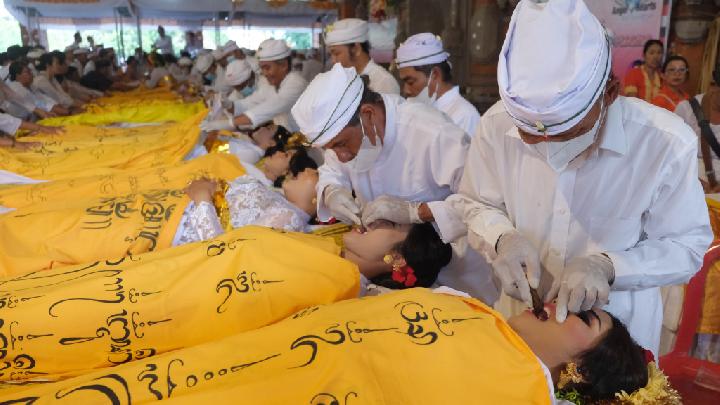
Metatah Tradition, one of the cultures in Bali, Indonesia.--
Next, participants are led to their respective merajan (houses) to pray.
This procession has several meanings: asking the ancestors for metatah, as a form of devotion to Sang Hyang Uma, offering caru (caru) to remove negative traits, and asking for prosperity and happiness.
5. Nrgajah/Ngendag
Afterward, participants return to the metatah ceremony to perform the ngendag (or ngrajah) ceremony. Led by a sangging (tooth sharpener), participants symbolically tattoo their eyebrows, teeth, right shoulder, left shoulder, and chest using a ruby ring or betel leaf stalk smeared with honey.
Then, the Tirtha Pemandes (traditional sacred water) is sprinkled to pray for safety. This ritual aims to unite the great and small worlds and ward off disasters that could disrupt human life.
6. Metatah/Mepandes Ceremony
Next, a tooth-filing ceremony is performed, where the person being offered lies on their back with their hands in the amustikarana position, covered with a white and yellow cloth. The tooth-filing ceremony is then performed by the sangging.
7. Bathing
After the tooth-filing ceremony is complete, the metatah participants cleanse themselves (bathe) in the river while reciting the sekah ngening (singing chant). The goal is to dissolve any negative traits inherent in the individual.
8. Mejaya-jaya
The metatah ceremony is incomplete without the mejaya-jaya ceremony.
Mejaya-jaya is closely related to asking for blessings from Ida Sang Hyang Widhi so that the activities undertaken will not be in vain.
Furthermore, Mejaya-jaya also signifies that the metatah person will always be protected in their life. Afterward, the Metatah participants pray at the temple where their idols are worshipped.
Thus, the Metatah ceremony is completed according to Hindu tradition. However, this process is also adapted to each person's village (place), kala (time), and patra (circumstances).
Cek Berita dan Artikel lainnya di Google News
Sumber:
- Share: