










Indonesian Coal Threatened with Exhaustion, How Many Remaining Reserves Are There?
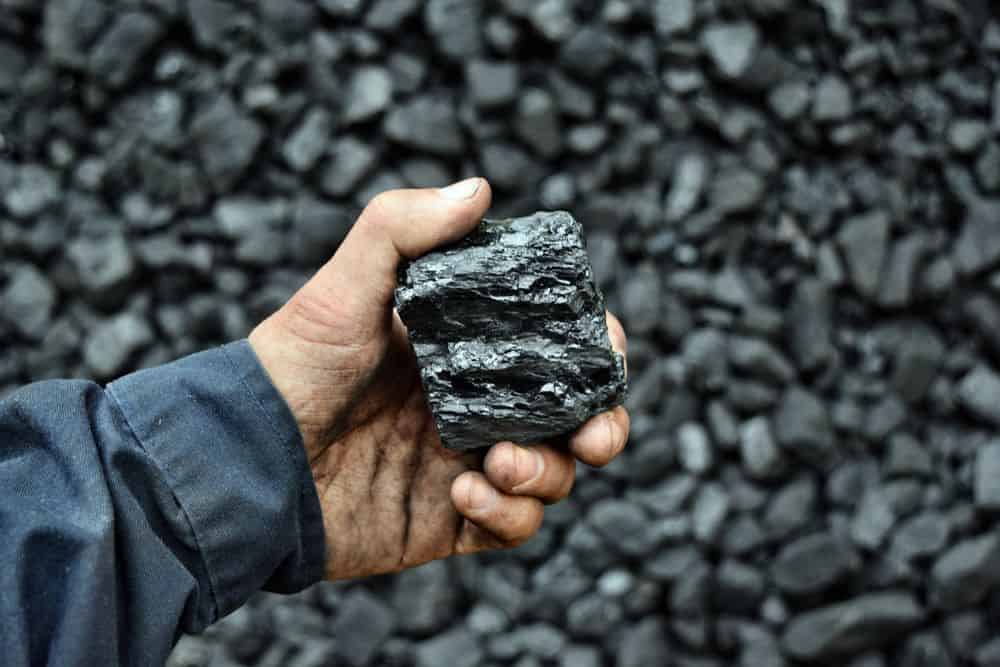
Continuously exploited, Indonesia's coal reserves are almost exhausted.--
Coal resources and reserves are divided into three quality categories: low, medium, and high. Low calorie refers to 4,200 kcal/kg (gar) or less, medium calorie 4,200-5,200 kcal/kg (gar), and high calorie 5,200 kcal/kg (gar) or higher.
Of the total coal resources in 2024, low-calorie coal dominated at 68.73 percent, followed by medium-calorie coal at 15.84 percent, and high-calorie coal at 15.41 percent.
Similarly, low-calorie coal reserves were dominated by low-calorie coal at 75.28 percent, followed by medium-calorie coal at 14.2 percent, and high-calorie coal at 10.5 percent.
Medium-calorie coal is predominantly used for coal-fired power plants (PLTU). Higher-calorie coal is generally used for industrial purposes, including cement.
Low-calorie coal, with its high moisture content, has a lower economic value. However, it can be blended with high-calorie coal to produce coal suitable for end users.
The Chairman of the Indonesia Mining & Energy Forum (IMEF), Singgih Widagdo, stated that, as stated in the 2025-2034 Electricity Supply Business Plan (RUPTL) of PT Perusahaan Listrik Negara (Persero), coal will still be needed until 2026. Furthermore, this will be strengthened by carbon capture and storage (CCS) technology.
According to him, high- and medium-calorie coal reserves need to be prioritized to meet domestic demand, even though the government currently prioritizes coal as a revenue driver. The export market for medium- and high-calorie coal needs to be reduced.
On the other hand, coal exploration activities need to be increased. "Furthermore, there needs to be control of coal production with a more definitive map, both in terms of volume and quality. This map will guide mining companies in developing work plans and budgets (RKAB) approved by the government," he said.
Singgih added that with 884 mining business permits (IUP) for production operations and 11 exploration permits, the government needs to map the multiplier effects on regional governments. This is a chart of the national coal production control plan.
BACA JUGA:East Java, Indonesia, Has a Lot of Gold, Rivaling the Gold in Papua
Citing the 2024 Performance Report of the Directorate General of Minerals and Coal, Ministry of Energy and Mineral Resources (ESDM), the life of coal reserves in 2024 was 43.93 years. This figure is derived from a comparison of the total proven coal reserves and coal production in the same year.
It is known that there is a downward trend in the lifespan of coal reserves, from 71.47 years (2020), 59.29 years (2021), 50.51 years (2022), and 48.76 years (2023). This decline is due to an increase in national coal production that is not matched by the addition of new reserves.
Based on calculations by the Directorate General of Mineral and Coal at the Ministry of Energy and Mineral Resources, current coal reserves can last for 43.93 years.
However, this reserve lifespan is still based on Indonesia's overall coal reserves and does not refer to quality classification or calorific value.
Singgih believes it would be dangerous if production control were based solely on volume without considering calorific value.
Cek Berita dan Artikel lainnya di Google News
Sumber:
- Share: